|
⇤ ← Revision 1 as of 2022-08-16 08:36:16
Size: 622
Comment:
|
Size: 5743
Comment:
|
| Deletions are marked like this. | Additions are marked like this. |
| Line 4: | Line 4: |
| == Geography == | Though the area had been inhabited for millennia by various Shuizu and Northern Aborigines, and was the site of a prosperous Hwasalbujok settler village for centuries prior, Beigang was officially founded during the reign of the 6th Earth King (1099 - 1064 BG), one of the Former Ting dynasty. This was part of the king's ambitious program of canal building and infrastructure improvement, linking Ba Sing Se to the North Sea. The city has flourished almost since its founding. During Qin's rebellion, Beigang was heavily damaged in fighting between a general of Qin the Great and a warlord supporting the 46th Earth King. It was rebuilt during the Hao Ting renaissance, with significant improvements to its urban planning. Lately, with the decline of the Hao Ting, the appointed officials of the city have been focused more on the extraction of tariffs on the Northern trade with the Central Earth Kingdom than with municipal administration. Criminal gangs, and even daofei, have been operating in the city, and citizens have banded together to form vigilante groups to protect themselves. Since the expansion of the Fire Nation invasion of the Earth Kingdom, refugees have come to the North, and many of them have settled in Beigang as it is more culturally familiar than the countryside. There has been a surge of refugees from the Central Continent recently, associated with the campaign of the Fire Nation's crown prince, General Iroh, to capture Ba Sing Se. This has added to the tensions within the city, as well as creating a homelessness problem and creating opportunities for criminals and rogues to exploit. == Geography and Climate == Beigang is situated on the West bank of the mouth of the Third Sister River. It is in a low-lying area, and much of the city is vulnerable to floods. Prior to the extensive flood control measures built by the earthbenders of the 6th Earth King, settlement had been confined to the relatively higher southwest part of the city's current territory. A few minor tributary creeks of the Third Sister River flow through Beigang. The winter climate is cold, with average temperatures below freezing for much of the winter. Spring and Autumn are mild and pleasant. Summers are moderately humid and warm, but not hot, with highs in the mid to upper 20s C. The climate is on the drier side, but there is some precipitation throughout the year, and it generally snows several times a year. |
| Line 6: | Line 20: |
| == Transport == | All major ethnic groups of the North are represented in Beigang. A plurality are Zhongzu, with the recent expansion of their population with refugees; there is tension not only between the refugees and the other ethnic groups, but between the refugees and "Old" Zhongzu who had been living there before the Fire Nation invasion. There is a large and very old Ganjinese ethnic enclave in the city, home to about half of Xinbei province's Ganjinese population. A Shuizu village on an island just north of the city proper, is also legally part of its jurisdiction, but is not directly administered by the mayor of Beigang. The government offices are located on the eponymous Yamen Hill in the Southwest of the town. == Transport and Infrastructure == The navigability of the mouth of the Third Sister River has been extensively improved by dredging and the construction of artificial riverbanks. There is also extensive development and improvement of the harbor, to such an extent that the original natural harbor at the site of Beigang is difficult to distinguish from its expansions. There are stone piers on the mouth of the river. A chain blocks the Third Sister River except for a designated channel, where officials may ensure that goods-laden shipping is diverted to the customshouses and properly taxed. There are also piers on the river itself. Since its reconstruction after Qin's Rebellion, the city has enjoyed good streets in the city center, and well-built bridges and public facilities. However, in the past few centuries, the infrastructure has fallen into relative disrepair under a series of administrators who have been neglectful of such municipal matters. A tunnel from inlet works on the Third Sister River upstream of the city provides drinking water to public fountains and baths, and some wealthy private estates. These waterworks were built in the reconstruction of the city after Qin's Rebellion, and greatly reduced the incidence of cholera. The water is delivered under pressure through tunnels earthbent through the bedrock, and is also used for hydraulic power in some areas. Beigang has an high-quality underground sewer system, mostly built around the same time, though some underground sewers in the city center were carved out by badgermole tunneling during the Great Ri and remain in use. Waste is held in ponds before being discharged into the Third Sister Bay to be carried out with the tides. Initially, the sewer system was expanded with the city, but the areas of the city that have been built in the past century or so are not consistently connected and many of them have waste removed by night-soil collectors or in crude open sewers. |
Beigang(北港, "Northern Port")is a port city in Xinbei Province (新北省) Northern Region of the Earth Kingdom. It is an important route for goods to be brought from the Northern coast of the Earth Kingdom, and from international trade with the Northern Water Tribes, to Ba Sing Se via the Great Canal system. Beigang is located near the outlet of the Third Sister River (三姐江) into its associated bay, which is a natural shelter for ships from the sometimes rough climate of the North Sea.
History
Though the area had been inhabited for millennia by various Shuizu and Northern Aborigines, and was the site of a prosperous Hwasalbujok settler village for centuries prior, Beigang was officially founded during the reign of the 6th Earth King (1099 - 1064 BG), one of the Former Ting dynasty. This was part of the king's ambitious program of canal building and infrastructure improvement, linking Ba Sing Se to the North Sea.
The city has flourished almost since its founding. During Qin's rebellion, Beigang was heavily damaged in fighting between a general of Qin the Great and a warlord supporting the 46th Earth King. It was rebuilt during the Hao Ting renaissance, with significant improvements to its urban planning.
Lately, with the decline of the Hao Ting, the appointed officials of the city have been focused more on the extraction of tariffs on the Northern trade with the Central Earth Kingdom than with municipal administration. Criminal gangs, and even daofei, have been operating in the city, and citizens have banded together to form vigilante groups to protect themselves. Since the expansion of the Fire Nation invasion of the Earth Kingdom, refugees have come to the North, and many of them have settled in Beigang as it is more culturally familiar than the countryside. There has been a surge of refugees from the Central Continent recently, associated with the campaign of the Fire Nation's crown prince, General Iroh, to capture Ba Sing Se. This has added to the tensions within the city, as well as creating a homelessness problem and creating opportunities for criminals and rogues to exploit.
Geography and Climate
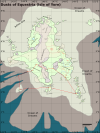
Beigang is situated on the West bank of the mouth of the Third Sister River. It is in a low-lying area, and much of the city is vulnerable to floods. Prior to the extensive flood control measures built by the earthbenders of the 6th Earth King, settlement had been confined to the relatively higher southwest part of the city's current territory.
A few minor tributary creeks of the Third Sister River flow through Beigang.
The winter climate is cold, with average temperatures below freezing for much of the winter. Spring and Autumn are mild and pleasant. Summers are moderately humid and warm, but not hot, with highs in the mid to upper 20s C. The climate is on the drier side, but there is some precipitation throughout the year, and it generally snows several times a year.
Demographics
All major ethnic groups of the North are represented in Beigang. A plurality are Zhongzu, with the recent expansion of their population with refugees; there is tension not only between the refugees and the other ethnic groups, but between the refugees and "Old" Zhongzu who had been living there before the Fire Nation invasion. There is a large and very old Ganjinese ethnic enclave in the city, home to about half of Xinbei province's Ganjinese population. A Shuizu village on an island just north of the city proper, is also legally part of its jurisdiction, but is not directly administered by the mayor of Beigang.
The government offices are located on the eponymous Yamen Hill in the Southwest of the town.
Transport and Infrastructure
The navigability of the mouth of the Third Sister River has been extensively improved by dredging and the construction of artificial riverbanks. There is also extensive development and improvement of the harbor, to such an extent that the original natural harbor at the site of Beigang is difficult to distinguish from its expansions. There are stone piers on the mouth of the river. A chain blocks the Third Sister River except for a designated channel, where officials may ensure that goods-laden shipping is diverted to the customshouses and properly taxed. There are also piers on the river itself.
Since its reconstruction after Qin's Rebellion, the city has enjoyed good streets in the city center, and well-built bridges and public facilities. However, in the past few centuries, the infrastructure has fallen into relative disrepair under a series of administrators who have been neglectful of such municipal matters.
A tunnel from inlet works on the Third Sister River upstream of the city provides drinking water to public fountains and baths, and some wealthy private estates. These waterworks were built in the reconstruction of the city after Qin's Rebellion, and greatly reduced the incidence of cholera. The water is delivered under pressure through tunnels earthbent through the bedrock, and is also used for hydraulic power in some areas.
Beigang has an high-quality underground sewer system, mostly built around the same time, though some underground sewers in the city center were carved out by badgermole tunneling during the Great Ri and remain in use. Waste is held in ponds before being discharged into the Third Sister Bay to be carried out with the tides. Initially, the sewer system was expanded with the city, but the areas of the city that have been built in the past century or so are not consistently connected and many of them have waste removed by night-soil collectors or in crude open sewers.
Economy
Culture