<<Card: execution failed [local variable 'page' referenced before assignment] (see also the log)>>
Overview
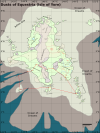
The Gan Jin (乾淨族) are a people of the Northern Earth Kingdom. Their homeland, Ganjingguo (乾淨國) is on the northern shore of the the Western Sea, in a forested and somewhat hilly area south of the Hanwang desert. They practice paddy cultivation of rice, and have an extensive fishing industry. Their capital of Gansanjiao (乾三角) lies on the Ostrich Horse River delta, being separated by the river from Zang Country (髒國). Since Late Antiquity, Ganjingguo has been the hub of a vast mercantile enterprise; Ganjinese seafarers traded as far west as the home Islands of the Fire Nation (before the outbreak of the war) and as far north as the lands of the Northern Water Tribe. This is to say nothing of their pivotal role in the settlement of the Western Continent of the Earth Kingdom. Ganjinese trading colonies dot the shores of the Western Earth Kingdom, and many of them were displaced to the interior by the invasion of the Fire Nation.
Ganjinese nobility married into various Earth Kingdom dynasties, and an acrimonious split in the Tu dynasty led to the emergence of a rival lineage of Earth Kings in Ganjingguo, the Western Tu, which later also called itself the Ganjinese Empire. This was the height of power for Ganjingguo, but despite the vast wealth flowing into their country from their mercantile empire and enjoying the support of various Western polities, they were not able to penetrate the walls of Ba Sing Se. Ironically, whereas the Western Tu failed to subdue the Eastern Tu by force, after many years, its last ruler sold the throne to a fantastically wealthy Ganjinese merchant and minor noble. Marrying the daughter of the king of the Western Tu, he united the thrones in his successor and founded the Later Gong dynasty. The Ganjinese dynasty in Ba Sing Se ruled for 484 years, with the earlier reigns being noted for prosperity and high culture. However, they fell into decadence and tried to conquer Omashu, leading to the downfall of the dynasty. A rump Ganjinese state, again referring to itself as the Ganjinese Empire, persisted West of the Ostrich Horse River, for some time thereafter. It ultimately fell after being destabilized by a war with the Fire Nation; the Jiongyu Avatar brought an end to the dispute and attempted to provide for future stability by arranging the unification of the Ganjinese Empire with the Ting Dynasty through a marriage alliance.
The Ganjinese largely prospered under the Hao and Ri dynasties, but began to decline under the Hao-Ting thanks to unfavorable governance and increasing competition from ethnic Central and Southern shipping and trading concerns. The Ganjinese supported the rebellion of Qin the Great, and the Yonggan-led Northern Khaganate after his rebellion collapsed, but Ganjingguo returned to the Hao Ting largely without a fight after it became clear that the reformed dynasty would prevail against Qin's various, less-successful successors.
The ruler of Ganjingguo is the Prince (or Princess) of the Gan Jin, who rules from the Hall of Divine Purity in Gansanjiao's Utmost Serenity Palace. The incumbent Prince is the elderly Prince Chuan, a cousin of Earth King Kui, whose mother is ethnically Ganjinese and a member of the former royal family.
The Gan Jin have a longstanding rivalry with the nearby Zang people, but are not above employing them as mercenaries. Many Zangs served as guards on Ganjinese merchant ships, and came to form their own colonies alongside Ganjinese trading posts and villages, where they often worked as longshoremen and market hunters. They preferred to live in their own villages rather than integrating with the Ganjinese because of their very different customs, diet and culture.
In the Ganjinese dialect of the Earth Kingdom language, the phonemes /n/ and /ŋ/ have merged into a single nasal final phoneme, being replaced with differences in vowel quality in most words. This is why they call themselves ganjinren and not ganjingren, which would be the standard pronunciation.
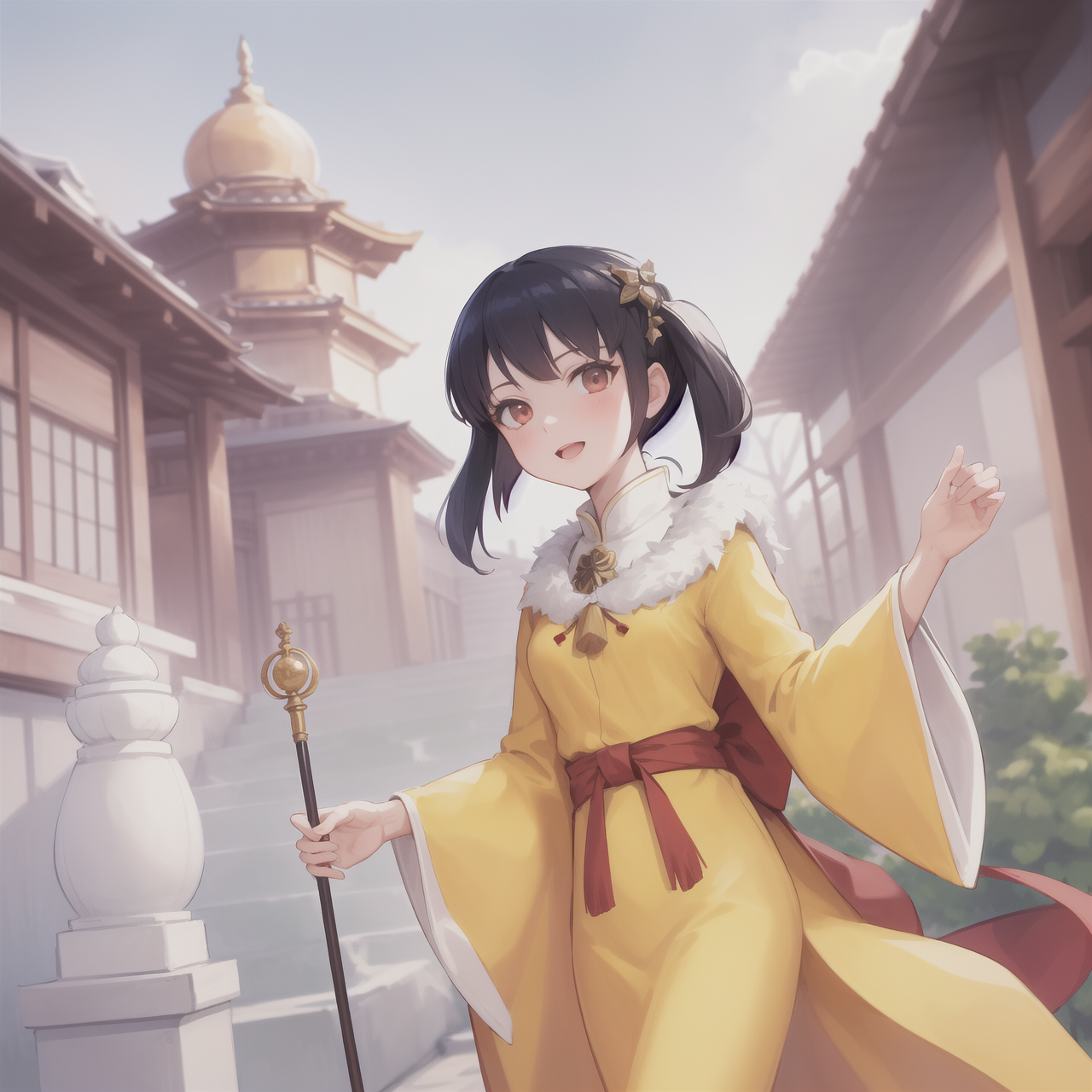
A young Ganjinese noblewoman in Gansanjiao, near the Yishen Pagoda (一神寶塔)
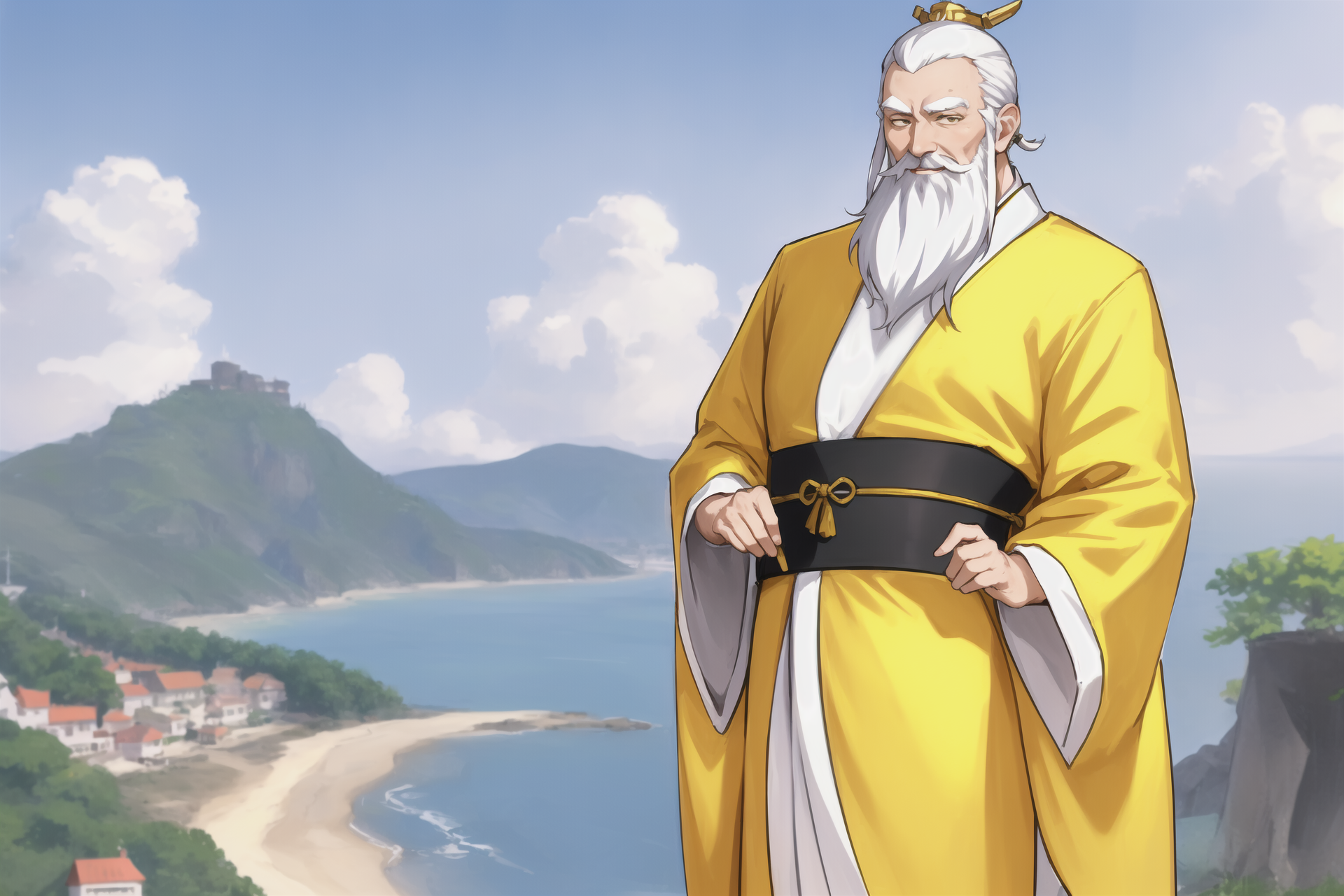
A Ganjinese elder on the southern coast of Gan Jin country at Zhutan Town (竹炭镇), noted for its exports of inksticks.
History
Antiquity
Pre-War
Since the War
Physical Anthropology
Distribution and Population
Culture
Language
Literature and Folklore
Arts and Music
Cuisine
Religion and Holidays